When Your Lawn Stays Soggy After Rain It's Time to Fix the Drainage
A lawn that holds water after rain isn't just an eyesore - it's a sign something is off below the surface. Most people assume it's a soil problem or just bad luck. But more often than not, it comes down to drainage that isn't doing its job.
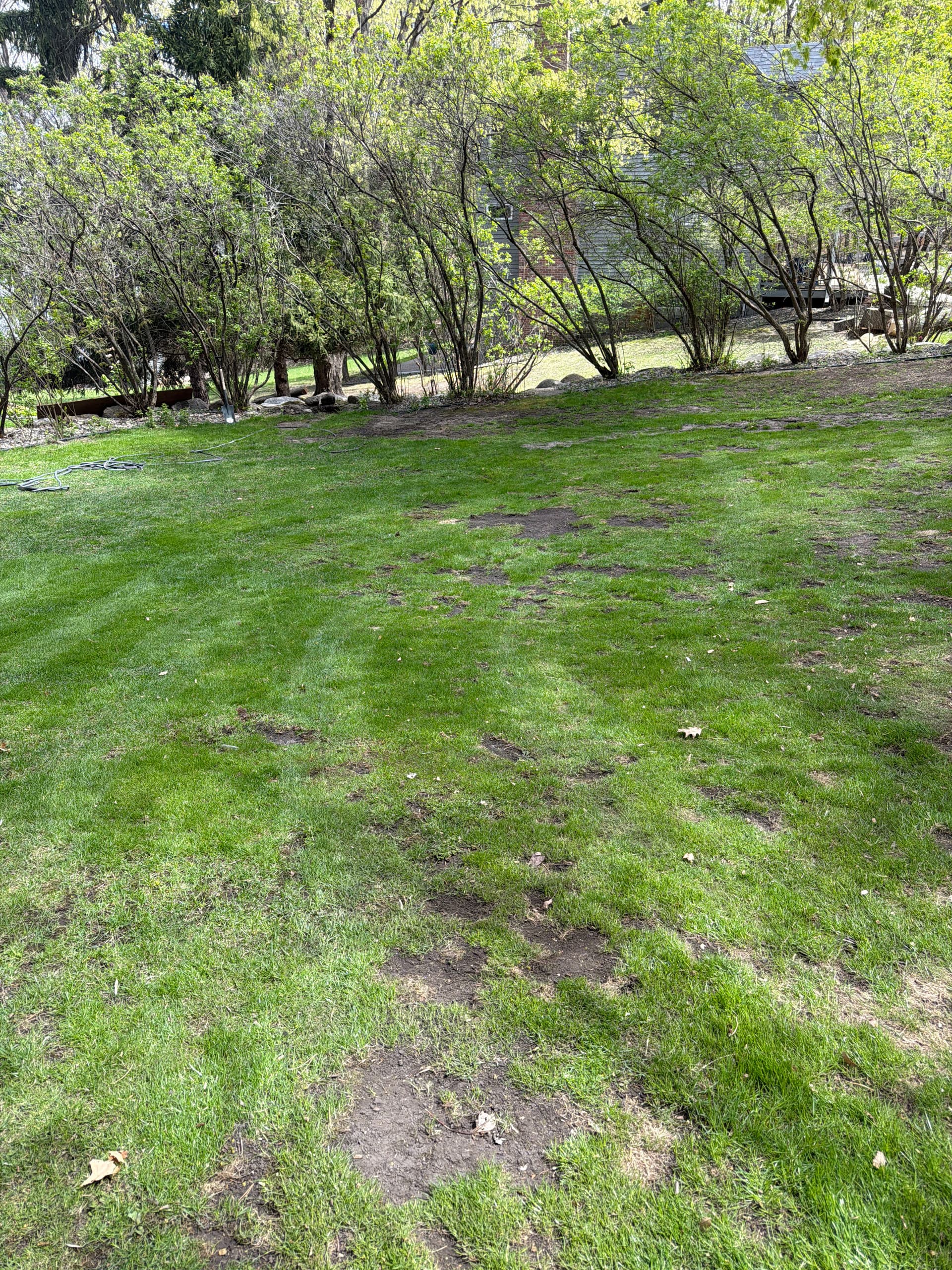
What you're looking at here is pretty common. Patchy grass, bare soggy spots scattered across the lawn, areas where water just sits instead of moving through. The grass thins out because the roots are essentially sitting in waterlogged soil. It can't breathe, it can't grow, and no amount of reseeding or fertilizing will fix it long-term if the drainage issue stays unaddressed.
That's the part a lot of homeowners miss. They treat the symptom - dead or thinning grass - without ever solving the actual problem. We come in and figure out where the water is coming from, where it needs to go, and what's stopping it from getting there. Sometimes it's the grade of the land. Sometimes it's compacted soil. Sometimes you need a proper drainage system put in to redirect the flow away from the lawn entirely.
Once the drainage is sorted, the lawn actually has a fighting chance. The grass fills back in, the soggy patches dry up, and the space becomes usable again - not just something you're tip-toeing around after every rainfall. It makes a real difference in how the whole yard looks and functions day to day.
If your garden is holding water and you're not sure why, that's exactly the kind of thing we sort out. Poor drainage left alone tends to get worse over time, not better.