What a Proper French Drain Actually Looks Like Mid-Install
A lot of homeowners deal with soggy spots in the yard for years before calling someone. Water pools up after rain, the grass stays wet for days, and eventually it starts creeping toward the foundation. It's a frustrating problem - and one that usually gets worse over time if you don't address the root cause.
That's where a properly built French drain makes all the difference. Not just a trench with a pipe thrown in, but a real system - the right pipe, the right filter fabric, the right grade. Every piece of it matters. Cut a corner on any one of those things and you're going to be dealing with the same soggy mess two years down the road.
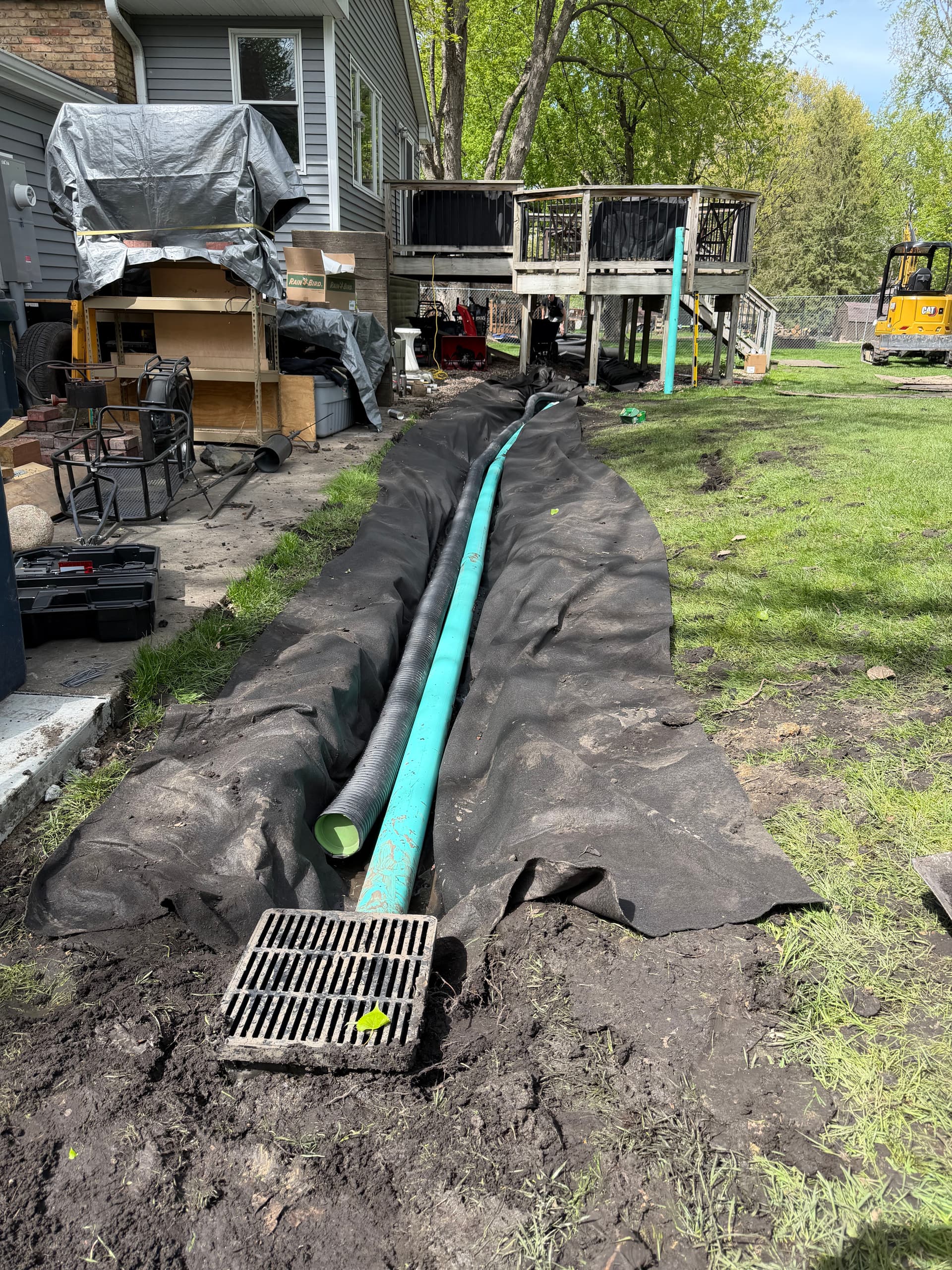
Here's what the work actually looks like while it's in progress. You can see the filter fabric laid out along the full run of the trench, with both a solid outlet pipe and a perforated drain pipe seated inside. The catch basin at the front of the run is what intercepts surface water at the source before it ever gets the chance to saturate the surrounding soil. This is the kind of setup that actually solves the problem long-term.
We take this stuff seriously because we know what happens when it's done halfway. Getting the pipe slope right, wrapping everything in fabric so silt doesn't clog the system over time, making sure water has a clear path to exit - that's not extra credit, that's just how it should be done. Every time.
If your yard has spots that stay wet or you're seeing water move toward your home after a heavy rain, a French drain system like this is usually the answer. The goal is simple: get the water moving the right direction, away from your home, and keep it that way.